
How Often Should You Do Pest Control in Al Ain?
For most Al Ain villas, quarterly pest control is the recommended minimum. That means one professional treatment every three months throughout the year. However, the right frequency for your specific property depends on four things: property type, pest history, season, and whether you have an active infestation or are working on prevention. Some properties need monthly visits. Others stay protected with twice-yearly treatments. This guide gives you an exact answer for every situation.
Why Al Ain Requires a Different Frequency Than Other UAE Cities
Al Ain is not Dubai. The pest risk profile here is distinct, and that directly affects how often treatment is needed.
Al Ain’s combination of desert heat, widespread garden irrigation, lush oasis greenery, and shared underground drainage infrastructure creates year-round pest pressure that does not drop off in cooler months the way it does in drier inland cities. Furthermore, the villa-dominant residential landscape means properties have larger surface areas, more entry points, and greater outdoor exposure than apartments in Abu Dhabi or Dubai towers.
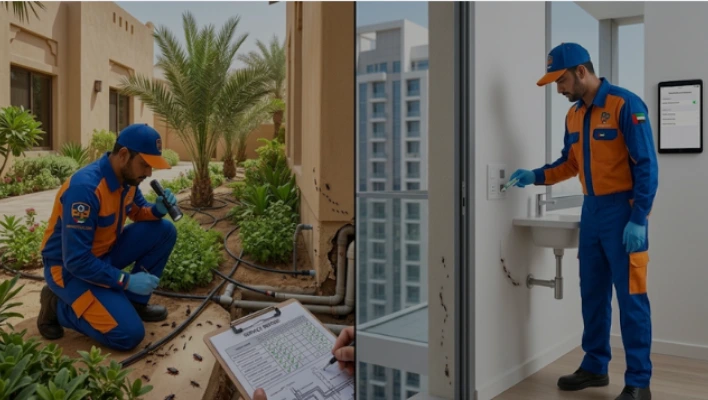
The Year-Round Pest Pressure Problem
In cooler climates, pest activity slows during winter. Al Ain does experience milder winters, but cockroaches, termites, and ants remain active indoors throughout December to February because indoor temperatures in villas stay warm and consistent. Consequently, the idea of skipping winter treatments is a common mistake that Al Ain homeowners make and later regret when spring infestations arrive already well-established.
How Al Ain's Climate Shapes the Treatment Calendar
Between May and September, Al Ain temperatures regularly exceed 40 degrees Celsius. Cockroach reproductive cycles accelerate. Mosquito breeding intensifies around irrigation systems and standing water. Ant colonies expand aggressively. During these months, the gap between treatments should be shorter, not longer. Additionally, October to March brings milder conditions, during which rodents seek shelter inside villas, making this period critical for rodent monitoring and perimeter sealing.
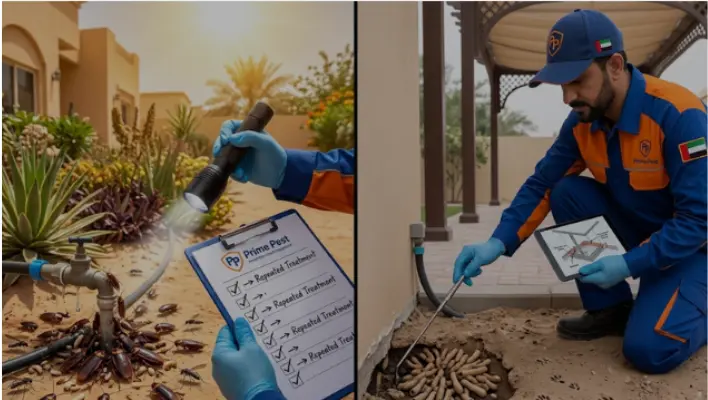
Pest Control Frequency by Property Type in Al Ain
Villas in Al Ain: Quarterly as the Baseline
For Al Ain villas, quarterly treatment is the professional standard. Four visits per year, spaced approximately 90 days apart, maintain a continuous protective barrier across all interior zones, the perimeter, and garden areas.
If your villa has a large garden with irrigation systems, an outdoor kitchen, or a history of termite activity, you should consider moving every two months during the summer peak season from May to September. Read our full guide on pest control for villas in Al Ain to understand exactly what each quarterly visit should cover across every zone of your property.
Apartments in Al Ain: Every Three to Four Months
Standard apartments in Al Ain benefit from treatment every three to four months. Ground-floor apartments near garden areas or shared drainage points need the shorter three-month interval. Higher-floor apartments with no history of infestation can often maintain protection on a four-month schedule.
However, furnished apartments with high tenant turnover, particularly in areas like Al Jimi and Al Towayya, carry a higher bed bug risk due to frequent furniture changes. These properties benefit from an inspection visit every two months, even when no active infestation is present
Commercial Properties: Monthly Is the Standard
Restaurants, cafes, hotels, and food processing facilities in Al Ain require monthly pest control visits as a minimum. Al Ain Municipality requires food businesses to maintain current pest control records. Monthly visits ensure compliance at all times and prevent any pest activity from reaching a level that triggers a failed inspection.
Offices and retail properties without food handling can typically maintain protection on a quarterly schedule. However, office break rooms and pantry areas should receive targeted treatment every two months during the summer due to elevated cockroach and ant activity.
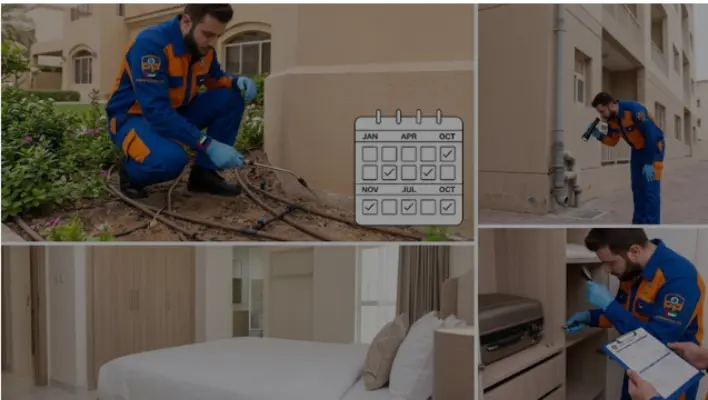
Pest Control Frequency by Pest Type in Al Ain
Different pests have different reproductive cycles, and the right treatment frequency aligns with those biological timelines. This is something most competitors completely ignore in their content, and it is precisely what determines whether your treatment schedule actually works.
Cockroaches: Every Two to Three Months
The German cockroach (Blattella germanica) reaches reproductive maturity in approximately 36 days and produces a new generation every 60 to 90 days under warm conditions. This biological timeline directly determines treatment frequency. A professional treatment every two to three months catches each new generation before it reaches reproductive maturity and prevents colony rebuilding between visits.
If your villa has a history of recurring cockroach activity, review our detailed guide on how to get rid of cockroaches in Al Ain villas permanently to understand why frequency alone is not enough without the right treatment method at each visit.
Termites: Annual Inspection, Ongoing Monitoring
Subterranean termites build slowly but cause damage continuously. An annual professional termite inspection is the minimum standard for all Al Ain villas. Properties with previous termite activity or with bait stations installed require quarterly monitoring visits to check bait consumption and colony activity levels.
Pre-construction soil treatment is a one-time application. Post-construction termite protection requires annual reapplication of soil treatment barriers to maintain effectiveness as the chemical degrades in the soil over time.
Bed Bugs: Immediate Treatment Plus Two Follow-Ups
Bed bugs do not require a recurring maintenance schedule in the same way as cockroaches or ants. However, once an infestation is confirmed, treatment requires an initial visit followed by a second visit at day 10 to 14 and a third inspection at day 28 to 30. This three-visit structure accounts for the hatching cycle of surviving eggs.
After confirmed elimination, furnished apartments in Al Ain with high tenant turnover benefit from a preventive inspection every six months to catch any new introduction before it establishes.
Ants: Every Two Months During Summer, Quarterly in Winter
Ant colony activity in Al Ain peaks sharply between April and October. During these months, foraging activity increases dramatically, and colonies expand rapidly. Consequently, targeted ant treatment every two months during the summer period delivers far better results than quarterly treatment that leaves a four-month gap during peak season. Between November and March, quarterly treatment is sufficient to maintain colony suppression and perimeter barriers.
Mosquitoes: Monthly During Peak Season
Mosquito treatment in Al Ain needs to be monthly between April and October. This is because the Aedes and Culex mosquito species active in Al Ain complete their lifecycle from egg to adult in as little as seven to ten days under summer temperatures. A monthly treatment programme that eliminates both adult mosquitoes and larval breeding sources in garden irrigation areas and standing water is the only approach that delivers meaningful season-long protection.
Between November and March, quarterly treatment is sufficient as mosquito populations reduce significantly in cooler temperatures.
Rodents: Quarterly Inspection, Immediate Action on Signs
Rodent control in Al Ain works best on a prevention basis. Quarterly perimeter inspections check for new entry points, gnaw marks, droppings, and bait station activity. The moment any rodent sign is identified, immediate targeted treatment is required. Rodents reproduce rapidly. A Norway rat female produces 40 to 60 offspring per year. Waiting for the next scheduled quarterly visit when active signs are present allows a colony to establish fully within weeks.
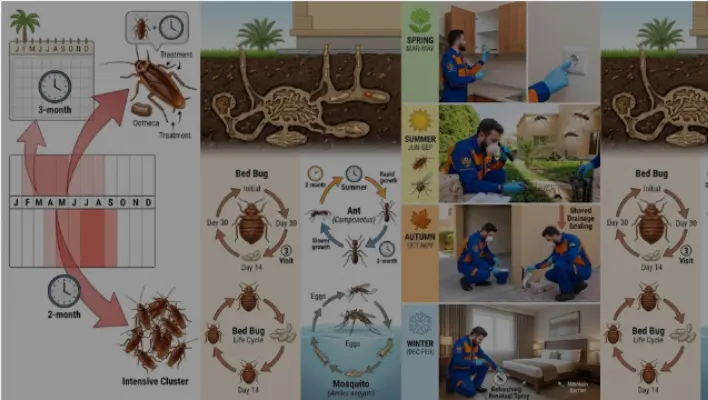
How Al Ain's Seasons Should Shape Your Treatment Schedule
Spring (March to May): The Critical Pre-Season Window
This is the most important treatment window of the year for Al Ain property owners. Cockroach populations that have been relatively contained during winter begin to expand rapidly as temperatures rise. Ant colonies increase foraging activity. Mosquito breeding begins in garden irrigation areas.
A professional treatment in March or April creates a chemical barrier before peak season pest pressure arrives. Missing this window means your summer treatment is reactive rather than preventive.
Summer (June to September): Increase Frequency
June to September is peak season for cockroaches, mosquitoes, and flies in Al Ain. Treatments during this period should be spaced at two-month intervals for villas and monthly for commercial properties. The higher frequency accounts for faster residual insecticide degradation in extreme heat and the accelerated pest reproductive cycles that reduce the effective protection window of each treatment.
Autumn (October to November): Rodent and Perimeter Focus
As temperatures drop, rodents begin seeking indoor shelter. October and November treatments should include specific attention to perimeter sealing, rodent bait station inspection, and garage and utility room treatment. This is also when termite swarming sometimes occurs in Al Ain following early rainfall.
Winter (December to February): Maintain, Do Not Skip
The most common mistake Al Ain villa owners make is skipping the winter treatment because pest activity appears low. Indoor conditions remain warm enough for cockroaches and ants to sustain active colonies throughout winter. A winter treatment visit maintains the gel bait supply in kitchen areas, refreshes the residual spray perimeter, and catches any rodent activity before spring amplifies the problem.
Signs That You Need to Increase Your Treatment Frequency
Regardless of what schedule you currently follow, certain signs indicate that your interval needs to be shortened immediately.
If you see cockroaches during the daytime, the colony has outgrown its harborage capacity and is at a serious infestation level. If ant trails appear inside your villa within four weeks of a recent treatment, the residual barrier has degraded faster than expected, possibly due to surface cleaning or extreme heat exposure. If you find new rodent droppings between scheduled visits, the current bait station coverage is insufficient.
In any of these situations, contact your municipality-approved pest control company immediately rather than waiting for the next scheduled visit. Acting at the first sign always costs less than managing an established infestation. For a detailed breakdown of what each professional visit should cost at your chosen frequency, refer to our pest control cost guide for Al Ain 2026.
Annual Maintenance Contract vs Individual Bookings
The most cost-effective and reliable way to maintain the right treatment frequency in Al Ain is through an annual maintenance contract (AMC). An AMC fixes your quarterly schedule, reduces the per-visit cost by 20 to 30 percent compared to individual bookings, and ensures your property is never left unprotected due to a forgotten booking.
For Al Ain businesses, an AMC also provides the documented treatment records required by Al Ain Municipality for food safety and operating license compliance. Individual visit receipts are acceptable, but an AMC with a licensed provider gives you a structured compliance record that is easier to present during inspections.
Annual Maintenance Contract vs Individual Bookings
By Property Type
- Al Ain villas: every three months minimum, every two months during summer
- Al Ain apartments: every three to four months
- Furnished apartments with high turnover: every two months
- Restaurants and food businesses: monthly
- Hotels: monthly
- Offices without food handling: quarterly
- Warehouses: every two months
By Pest Type
- Cockroaches: every two to three months
- Termites: annual inspection, quarterly monitoring for active properties
- Bed bugs: three-visit elimination programme, then six-monthly inspection
- Ants: every two months from April to October, quarterly from November to March
- Mosquitoes: monthly from April to October, quarterly from November to March
- Rodents: quarterly inspection, immediate action on any active signs
- Flies: monthly during summer, quarterly in winter for commercial properties
Conclusion
Getting your pest control frequency right in Al Ain is not complicated once you understand the factors that matter. Quarterly visits form the foundation. Summer seasons, commercial properties, and active infestations require shorter intervals. The key is consistency. A missed visit during peak season can undo months of protection within weeks.
Contact Prime Pest UAE today to build a treatment schedule tailored to your Al Ain property. Our municipality-approved team covers every area of Al Ain, and every visit includes a written service report, follow-up recommendation, and a satisfaction guarantee.
Frequently Asked Questions
How often should a villa in Al Ain have pest control?
A villa in Al Ain should have professional pest control at least once every three months. During the summer months from May to September, increasing to every two months delivers better protection against cockroaches, ants, and mosquitoes during peak activity season.
Is quarterly pest control enough for an Al Ain apartment?
Yes, for most Al Ain apartments, quarterly treatment is sufficient when combined with good sanitation and sealed entry points. Ground-floor apartments near gardens or drainage areas benefit from a three-month rather than a four-month interval.
How often do Al Ain restaurants need pest control?
Al Ain restaurants and food businesses require monthly pest control visits to maintain Al Ain Municipality compliance and food safety standards. High-volume kitchens may benefit from bi-monthly visits during the summer months.
Should I do pest control in winter in Al Ain?
Yes. Skipping winter treatment is one of the most common mistakes Al Ain residents make. Indoor temperatures remain warm enough for cockroaches and ants to stay active throughout winter. A winter treatment maintains gel bait supplies and residual barriers that keep spring infestations from arriving already established.
How do I know if I need more frequent pest control in my Al Ain villa?
Daytime cockroach sightings, ant trails appearing within weeks of treatment, new rodent signs between visits, or recurring mosquito activity despite garden treatment all indicate that your current interval needs to be shortened. Contact your pest control provider immediately rather than waiting for the next scheduled visit.
Does an annual maintenance contract cover the right frequency for my Al Ain villa?
A well-structured AMC from a municipality-approved company, like Prime Pest UAE, schedules four quarterly visits per year, which covers the minimum recommended frequency for Al Ain villas. Confirm with your provider that summer visits can be adjusted to a two-month interval if your property is in a high-risk area or has a history of severe infestations.